 Washington Porta Potty Rentals
Accessible portable restrooms begin with the route
An accessible portable restroom is only useful when people can reach and use it. Treat the unit, approach, surrounding space, and signs as one system. Walk the intended route as a site user would: from the nearest practical entrance, across the actual surface, to the door and back to the main circulation path.
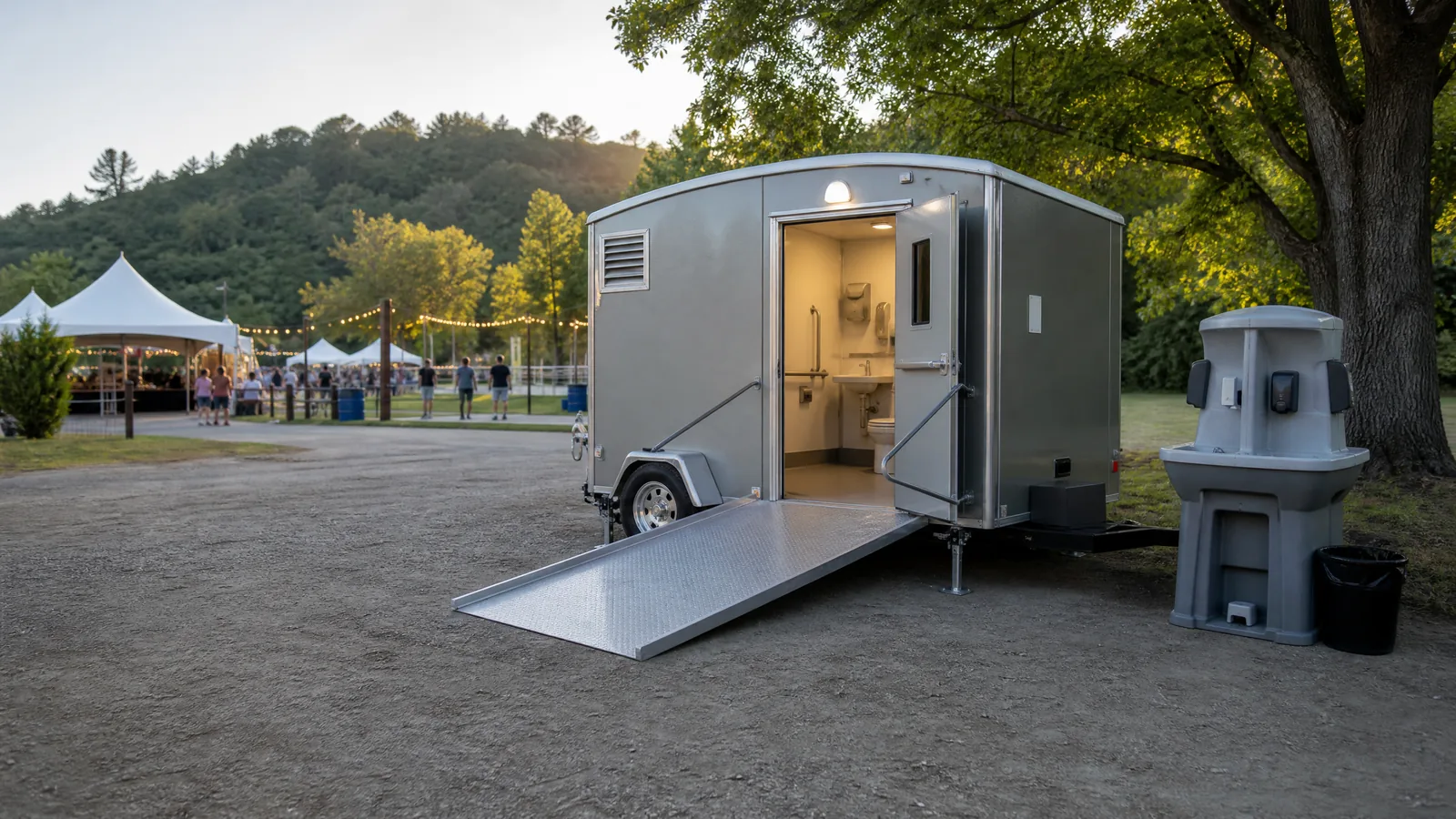
Check the approach and surrounding space
The route should be firm, reasonably level, and free of avoidable obstacles such as equipment, parked vehicles, deep mud, loose debris, or crowded queues. Leave room for the door area and maneuvering without pushing users into traffic.
Make inclusion visible without making it awkward
Place the accessible unit where it is easy to find and where the route is as convenient as other guest routes. Do not use it as overflow storage or hide it at the edge of the property.
Bring the details together
Share the site address, date range, estimated attendance or crew size, surface and access information, nearby structures, accessibility needs, handwashing needs, and venue instructions. The site itself determines the practical plan.
Start with a clear brief.
Call (771) 251-5324 or use the form to outline the site and the questions that matter.
3152 Bladensburg Road NE, Washington, DC 20018
For a site-specific rental quote, call (771) 251-5324. Share the location, rental dates, expected users, and any access details when you call.